We all grew up watching TV, so why is YouTube so different?
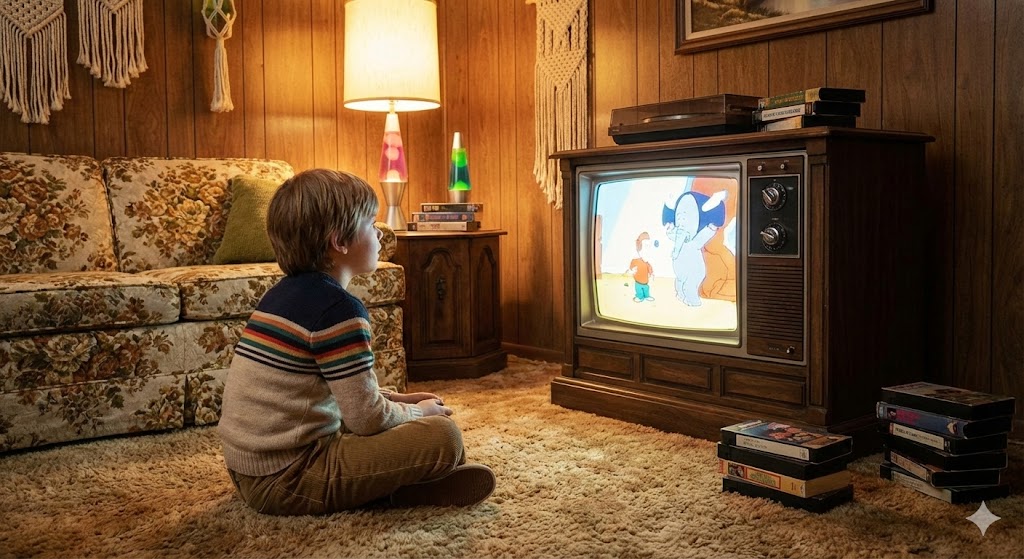
I’m a dad of two young kids. When I was growing up, watching TV meant picking a show, sticking to a schedule, maybe flipping channels, but always knowing what you were getting. There was no autoplay, no “next video” suggestions, no infinite scrolling and definitely no "shorts". It was simple and predictable. For better or worse, it was safe.
Fast-forward to now. My kids love watching videos on YouTube and who can blame them? There’s a universe of animated stories, songs, science experiments, and more, but most of what they get served comes via an algorithm: flashy, fast-paced, designed to catch attention, keep them hooked, and move them from one video to the next automatically. That "just one more" pattern feels harmless, but I worry it’s nothing but.
Why “short-form” video feels different
Platforms full of short videos (TikTok, YouTube shorts, etc.) are designed around dopamine hijacking, rewards and instant gratification. Research is increasingly showing that this kind of content, when consumed heavily, is associated with many problems: reduced attention span, difficulty focusing and even impaired memory.
One recent study found that using these short-video feeds can weaken a child’s ability to remember and act on previously planned tasks. Another survey of school-age kids linked frequent short-video use with higher symptoms of inattention, even among children without prior diagnoses.
In addition, the constant stream of new content: rapid scene changes, frequent stimulation, rewires expectations. Things that used to hold a child’s attention (a story, a book, even a calm cartoon) can start to feel slow or “boring”. Instead, their brain begins to crave quick hits of dopamine and stimulation.
Some of these studies also flag deeper risks: overuse of short-form video has been associated with disrupted sleep, social anxiety and reduced emotional regulation among teens.
It’s not just about “age-appropriate” content
You might think “Well, as long as it's age-appropriate, it’s fine”. The problem is that’s only about what’s allowed. That doesn’t guarantee it's good. Even when a platform filters out violent or explicit content, it doesn’t filter out mind-numbing, low-value, hyper-stimulating videos. A video might pass every “safe content” rule but still be shallow, addictive, and negatively impacting attention and habits.
One of the most subscribed channels on YouTube is CoComelon. This passes their "age appropriate" filter, but I definitely would not want my children watching it all day. It's fast paced and built to overstimulate your children. I would much prefer them watching something slower paced, more realistic and maybe with a more substantial storyline.
Even services aiming to be “kid-safe” often keep recommendation engines, autoplay, and short clips — which doesn’t solve the core issue of overstimulation.
What this means to me
As a parent, all this makes me uneasy. I don’t want my kids to lose their ability to be bored because boredom often sparks imagination, daydreaming, creativity. I don’t want them to lose the patience and attention span to enjoy a simple story, a real conversation or a thoughtful activity.
A small note on what I’m doing about it
Because of all this, and after talking with other parents, I started working on something to give kids the good of video content without the endless stimulation and algorithmic hype. There are so many quality YouTube channels that have kids TV shows that aren't just garbage. There's so many channels that also teach science, math, physics and more.
I built an app for parents to control exactly what channels their kids can watch, and to watch in a simple, “TV like” mode: no autoplay, no random recommendations, no jumping from video to video and no short-form rabbit holes.
If you’re also worried and want a safer alternative for your kids, check out my app - Cubflix.